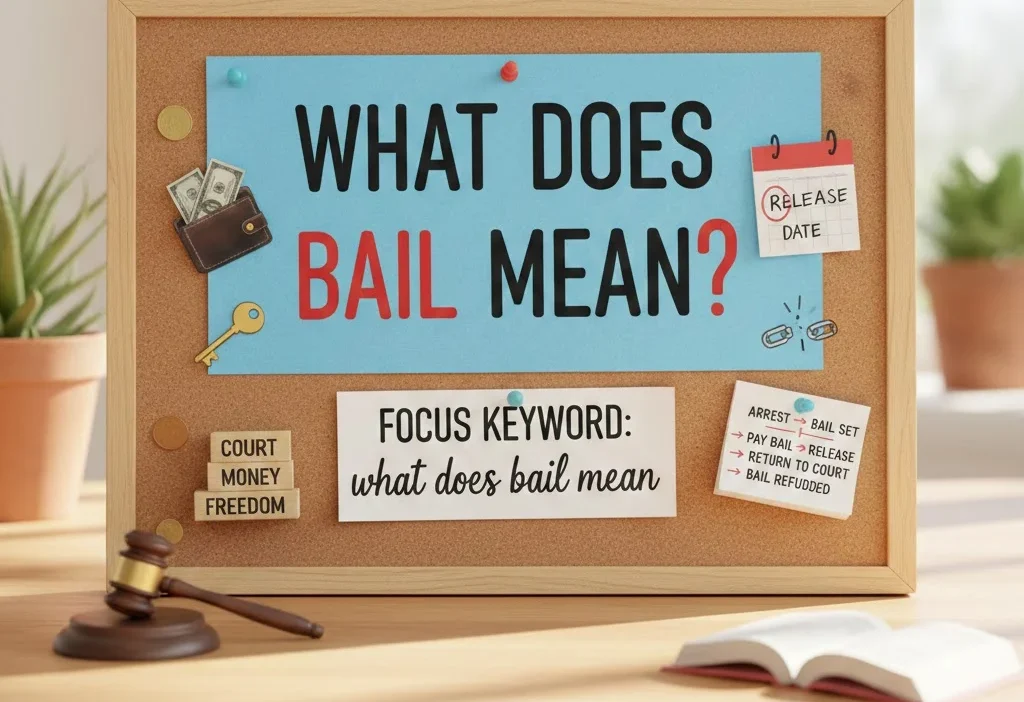
Ever gotten a message, seen a headline, or heard someone say, “He posted bail” and wondered what bail actually means? You’re not alone. The term shows up in movies, news, and real-life legal situations — yet many people only have a vague idea of what it means.
The first time I heard it, I imagined something like a “ticket to freedom,” without knowing how it works. If you’ve ever thought the same, this breakdown makes it easy.
Quick Answer:
“Bail” means the money or conditions set by a court that let someone leave jail while they wait for trial. It’s a temporary release based on trust, rules, or payment.
🧠 What Does Bail Mean? (Simple Explanation)
Bail is a legal term that refers to money, bond, or conditions that allow an arrested person to be released from jail before their trial.
It’s not a fine and not a sign that someone is innocent — it’s simply a way to make sure they return to court.
Example Sentence:
“He paid bail yesterday, so he’ll be home until his court date.”
In short:
Bail = Temporary freedom until trial = A court-approved release with conditions.
People often confuse bail with “bond,” but bail is the amount set, while a bond is a promise or payment from a bail bondsman.
📱 Where Is “Bail” Commonly Used?
You’ll see the term “bail” in:
- 📰 News headlines
- 🎬 Movies and crime shows
- ⚖️ Courtrooms and legal documents
- 🚓 Police reports
- 💬 Everyday conversations during discussions of arrests
- 📱 Social media explanations of legal cases
Formality Level:
- ✔ Formal in legal settings
- ✔ Casual in everyday talk
- ✖ Not slang — it’s a legal term
💬 Examples of “Bail” in Real-Life Conversations
A: Did they release Mark yet?
B: Yeah, he got bail this morning.
A: What is his bail amount?
B: The judge set it at $5,000.
A: Why didn’t he get bail?
B: The court said he’s a flight risk.
A: Will he stay home now?
B: As long as he follows his bail conditions.
A: Can someone else pay my bail?
B: Yes, a family member or bail bondsman can.
🕓 When to Use and When NOT to Use “Bail”
✅ Use “Bail” When:
- Talking about temporary release from jail
- Discussing court decisions
- Referring to bail amounts or conditions
- Explaining legal rights
- Describing pre-trial situations
❌ Don’t Use “Bail” When:
- Talking about someone being found innocent or guilty
- Talking about fines or fees
- Referring to parole or probation
- Describing a completed trial
- Discussing sentences or punishment
📊 Comparison Table: Correct vs. Incorrect Context
| Context | Example Phrase | Why It Works |
|---|---|---|
| Friend Chat | “He’s out on bail now.” | Casual & correct |
| Work Chat | “He was released but must follow bail conditions.” | Professional & accurate |
| “The defendant posted bail yesterday.” | Formal legal tone | |
| Wrong Context | “He paid bail after losing the case.” | ❌ Bail is before trial |
🔄 Similar Legal Terms or Alternatives
| Term | Meaning | When to Use |
|---|---|---|
| Bond | Payment/guarantee by a bondsman | When someone can’t pay full bail |
| Parole | Early release after serving jail time | After conviction |
| Probation | Supervised freedom instead of jail | As a sentence |
| Release on Recognizance (ROR) | No-payment release | Low-risk defendants |
| Detention | Being kept in jail | Before trial |
These aren’t interchangeable — each has its own legal meaning.
❓ FAQs About Bail
1. Is bail the same as being innocent?
No. Bail only means someone is released until their trial.
2. Who decides the bail amount?
A judge, based on risk, crime type, and legal guidelines.
3. Can bail be denied?
Yes. For serious charges, flight risk, or safety concerns.
4. Do you get bail money back?
Yes, if the person attends all court hearings.
5. Can someone else pay your bail?
Yes — friends, family, or a bail bondsman.
6. What happens if bail conditions are broken?
The person can be re-arrested, and bail can be revoked.
7. Is bail always money?
No. Some bail is based on promises, rules, or monitoring.
📝 Mini Quiz – Test Your Knowledge
1. What does “bail” mean?
a) A punishment
b) Temporary release before trial ✅
c) A fine
2. Who sets the bail amount?
a) Police
b) A judge ✅
c) Lawyer
3. Do you always need money for bail?
a) Yes
b) No, sometimes conditions only are used ✅
c) Only for serious cases
4. What happens if someone skips court?
a) Nothing
b) Bail is refunded
c) Bail is lost & they can be arrested again ✅
5. Which is a correct use of the word “bail”?
a) “He paid bail after sentencing.”
b) “She posted bail and went home.” ✅
c) “He got bail for being innocent.”
📝 Conclusion
Bail is a simple but important legal term that describes temporary freedom before trial. It ensures people can return home, work, and prepare for court — as long as they follow conditions and show up when required. Understanding what bail means helps you interpret news stories, legal discussions, and everyday conversations with clarity.
It’s a term that affects real lives, real families, and real justice outcomes. Now you know exactly what it means — clearly and confidently.