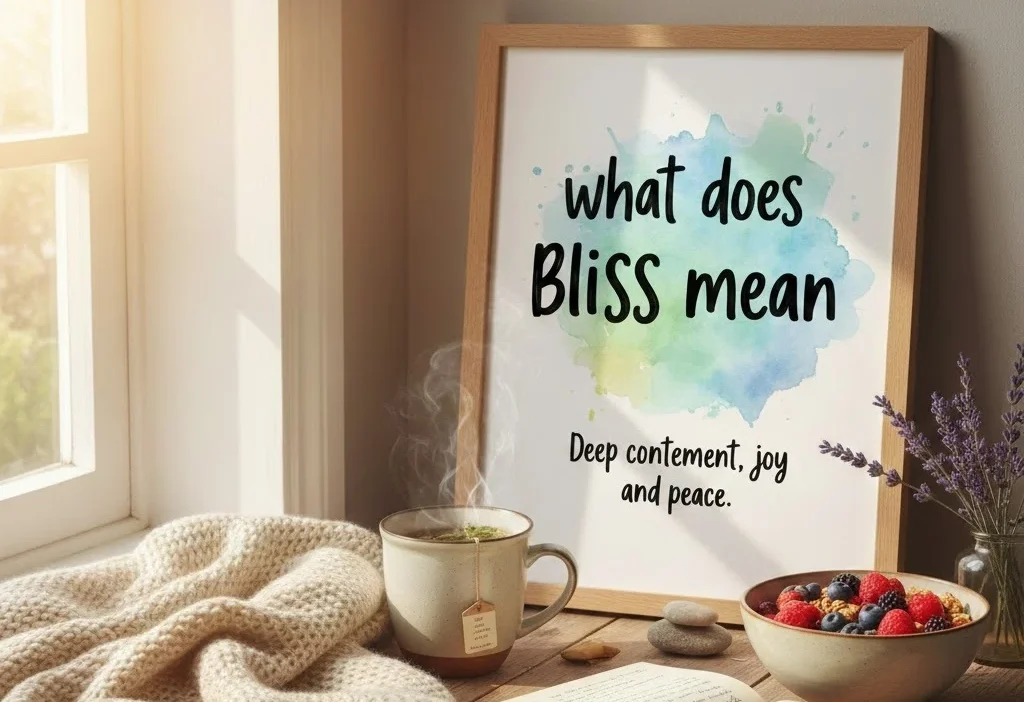
Have you ever felt a moment where everything seems perfect? That overwhelming sense of joy, peace, and contentment is often referred to as bliss. But what does bliss mean exactly, and why do people crave it?
In today’s fast-paced world, understanding bliss can help you find happiness in small moments, connect more deeply with life, and even reduce stress. Whether you’re exploring mindfulness, spirituality, or simply curious about the term, this guide will cover everything: the definition, examples, how it’s used, and ways to experience it in everyday life.
By the end, you’ll have a clear understanding of bliss and practical tips to cultivate it—without complicated theories.
Definition & Meaning of Bliss
Bliss is a noun that generally refers to a state of perfect happiness, joy, or contentment. Unlike momentary pleasure, bliss is deeper—it’s lasting and fulfilling.
Key Points:
- Bliss goes beyond happiness; it is serene, peaceful, and complete.
- It can be spiritual, emotional, or even physical.
- People often experience bliss in nature, relationships, meditation, or creative activities.
Examples in Daily Life:
- Watching the sunset with a loved one and feeling completely at peace.
- Enjoying a quiet moment of meditation where all worries fade away.
- Completing a meaningful project and feeling immense satisfaction.
Dialogue Example:
Anna: “I just finished reading my favorite book and sipped tea in my garden. I feel pure bliss.”
Mark: “That sounds amazing. I love when life feels that peaceful.”
Origins & History of the Word Bliss
The word bliss has Old English roots. It comes from the word “blīths”, meaning “joy” or “gladness”. Over centuries, the term evolved in English literature and philosophy to signify not just happiness, but deep spiritual joy.
- Historical Use: Ancient poets and philosophers often described bliss as a state of inner peace and enlightenment.
- Cultural Influence: Different cultures interpret bliss uniquely—Eastern traditions like Buddhism equate bliss with nirvana or liberation, while Western philosophies often link it to personal fulfillment and love.
- Modern Usage: Today, bliss is commonly used in everyday language, social media captions, and self-help literature to describe a peak emotional state.
Bliss in Different Contexts
Emotional & Personal Bliss
Bliss can arise from emotional experiences:
- Love and Relationships: Being with someone who truly understands you can create moments of bliss.
- Personal Achievements: Graduating, completing a project, or learning a new skill often brings lasting joy.
Example:
“When I finally ran my first marathon, I felt bliss unlike anything before—it wasn’t just pride, it was pure joy.”
Spiritual & Mindful Bliss
Spiritual bliss is about inner peace and detachment from stress. Practices like meditation, yoga, or prayer often lead to this state.
- Meditation can help slow the mind and awaken joy.
- Mindfulness practices make you present, allowing small moments to feel blissful.
Example:
A monk meditating at sunrise experiences bliss through stillness and awareness, even without material possessions.
Bliss in Literature & Art
Writers and artists often depict bliss as a state of ideal happiness. Poems, novels, and paintings may use bliss to convey ultimate joy, harmony, or spiritual enlightenment.
Example:
- In poetry: “And in that silent moment of the forest, I knew bliss.”
- In painting: serene landscapes often evoke feelings of bliss in the viewer.
Bliss in Social Media & Everyday Language
Online, people often use the word bliss to describe enjoyable experiences:
- Instagram: “Coffee + sunshine = bliss ☕🌞”
- TikTok: Short clips showing happy moments often tag “bliss” to convey joy.
Tips:
- Use “bliss” sparingly to highlight truly meaningful moments.
- Pair with emojis or visuals for added emotional effect.
Physical & Sensory Bliss
Bliss isn’t just emotional; it can also be sensory. Activities like:
- Listening to your favorite music
- Enjoying a delicious meal
- Feeling warm sunlight on your skin
These can trigger dopamine release, making the experience feel blissful.
Dialogue Example:
“This chocolate cake is pure bliss!”
“I know, right? I could eat it every day.”
Bliss vs Happiness: Understanding the Difference
| Term | Meaning | Duration | Depth | Context |
|---|---|---|---|---|
| Bliss | Complete joy, serenity | Long-lasting | Deep | Spiritual, emotional, artistic |
| Happiness | Joy, contentment | Short-term | Moderate | Everyday experiences |
Key Takeaway: Bliss is deeper and more profound than everyday happiness.
How to Experience Bliss in Daily Life
1. Mindfulness & Meditation
- Focus on breathing and presence.
- Accept the moment without judgment.
2. Gratitude Practice
- Daily journaling of things you’re grateful for.
- Recognize small joys, not just big events.
3. Connecting with Nature
- Walks in the park, mountains, or beaches.
- Observe surroundings—the sound of waves or birds can trigger bliss.
4. Creative Expression
- Painting, writing, or music can create flow states leading to bliss.
5. Strong Relationships
- Spend quality time with loved ones.
- Shared joy enhances mutual bliss.
Dialogue Example:
Sarah: “I never realized a simple walk could feel this amazing.”
Emma: “That’s bliss—you’re present and enjoying every step.”
Cultural Perspectives on Bliss
- Eastern Cultures: Buddhism and Hinduism link bliss with spiritual liberation and enlightenment.
- Western Cultures: Often associated with personal success, love, and freedom.
- Global Influence: Music, travel, and nature appreciation universally inspire bliss.
Example:
- Japanese “Ikigai” philosophy emphasizes finding purpose as a path to bliss.
- Indian philosophy describes bliss (Ananda) as inner joy beyond material desires.
Common Misunderstandings About Bliss
- Bliss is not constant: It’s a state that comes and goes.
- Bliss ≠ materialism: Buying things may bring temporary happiness but not deep bliss.
- Bliss is personal: What’s blissful for one may not be for another.
Frequently Asked Questions (FAQs)
Q1: Can anyone experience bliss?
A: Yes, anyone can experience bliss through mindfulness, gratitude, or meaningful activities.
Q2: Is bliss the same as happiness?
A: No, bliss is deeper and more lasting than momentary happiness.
Q3: Can meditation create bliss?
A: Absolutely! Meditation promotes inner peace, presence, and joy.
Q4: How can I know if I’m feeling bliss?
A: Signs include calmness, contentment, joy, and a sense of completeness.
Q5: Is bliss always spiritual?
A: Not necessarily; it can be emotional, sensory, or relational as well.
Conclusion
Bliss is more than just happiness—it’s a profound sense of joy, contentment, and peace that touches your mind, heart, and soul. Whether you find it in quiet meditation, loving relationships, creative pursuits, or nature, bliss reminds you to pause, appreciate, and live fully. Understanding what bliss means can help you cultivate meaningful experiences, reduce stress, and embrace life’s small joys. By practicing mindfulness, gratitude, and connection, you can invite bliss into everyday life. Remember, bliss is personal, unique, and attainable—so cherish those moments that make you feel truly alive.