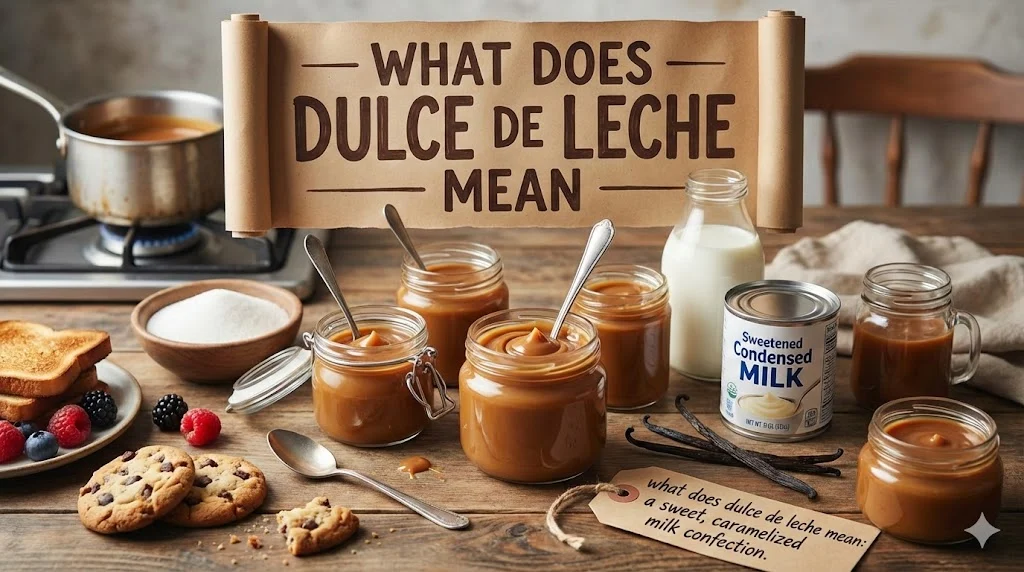
Have you ever seen dulce de leche written on a dessert menu and wondered what it actually means? Maybe you spotted it on ice cream, cake fillings, or cookies and thought, “Is it caramel? Is it something else?” You’re not alone. Many people search “what does dulce de leche mean” because the name sounds fancy, foreign, and delicious — but its meaning isn’t always clear.
In this guide, you’ll learn the exact meaning of dulce de leche, its language origin, how it’s used, how it tastes, how it compares to caramel, where it comes from, and why it’s so popular worldwide. By the end, you’ll not only know what it means — you’ll understand why people love it.
Quick Answer:
Dulce de leche means “sweet milk.” It’s a rich, creamy dessert sauce made by slowly heating milk and sugar until it becomes thick, golden, and caramel-like.
🧠 What Does Dulce de Leche Mean?
The phrase dulce de leche comes from Spanish and translates directly to “sweet of milk” or more naturally “sweet milk.”
- Dulce = sweet
- De = of
- Leche = milk
In everyday language, dulce de leche refers to a thick, creamy spread or sauce made by slowly cooking milk and sugar until it turns golden brown and deeply flavorful.
Example sentence:
“This cake is filled with dulce de leche, and it’s unbelievably rich.”
In short:
Dulce de leche = Sweet milk = A creamy milk-based dessert sauce
It’s loved for its smooth texture, deep sweetness, and comforting flavor, often compared to caramel — but it’s not exactly the same.
🌍 Origin and History of Dulce de Leche
Dulce de leche has a long and debated history, especially in Latin America. Several countries claim to have invented it.
Most common origin stories:
- Argentina: One popular legend says it was discovered accidentally when milk and sugar were left cooking too long.
- Uruguay: Also claims early versions of the dessert.
- Mexico: Uses a similar version called cajeta (usually made with goat’s milk).
- Spain: Introduced sweetened milk desserts that influenced Latin America.
Over time, dulce de leche became a cultural staple across Latin America and later spread worldwide.
Cultural Note:
In many Latin countries, dulce de leche isn’t just a dessert — it’s comfort food, tradition, and nostalgia.
🍮 What Does Dulce de Leche Taste Like?
Dulce de leche has a rich, sweet, and creamy flavor.
Flavor profile:
- Sweet but not overly sugary
- Creamy and smooth
- Slightly toasted or caramelized notes
- Warm, comforting taste
It melts in your mouth and pairs perfectly with baked goods, fruits, and ice cream.
Texture:
- Thick and spreadable
- Smooth and silky
- Sometimes slightly sticky
🍯 Dulce de Leche vs Caramel (Important Difference)
Many people confuse dulce de leche with caramel, but they’re not the same.
| Feature | Dulce de Leche | Caramel |
|---|---|---|
| Main ingredient | Milk + sugar | Sugar (sometimes butter & cream) |
| Cooking process | Slow simmer | Sugar heated until melted |
| Texture | Creamy & smooth | Sticky or hard |
| Flavor | Milky, rich | Sharp, burnt sugar |
| Color | Light to deep golden | Amber to dark brown |
Bottom line:
Dulce de leche is milk-based, while caramel is sugar-based.
🍰 Where Is Dulce de Leche Commonly Used?
Dulce de leche is incredibly versatile and appears in many desserts:
- 🍦 Ice cream swirl or topping
- 🎂 Cake fillings and frostings
- 🍪 Cookies and sandwich cookies
- 🥞 Pancakes and waffles
- 🧁 Cupcakes and pastries
- 🍎 Fruit dip (bananas, apples)
- 🍞 Spread on toast or bread
It’s especially popular in:
- Argentina
- Uruguay
- Mexico
- Chile
- Spain
- United States (dessert menus)
💬 Real-Life Examples of Dulce de Leche Usage
- “This cheesecake has a dulce de leche swirl.”
- “I ordered churros with dulce de leche dipping sauce.”
- “That ice cream flavor tastes like caramel — but it’s actually dulce de leche.”
- “She spread dulce de leche on toast for breakfast.”
- “The cake is layered with chocolate and dulce de leche.”
- “Dulce de leche brownies are my favorite dessert.”
🕓 When to Use & When NOT to Use Dulce de Leche
✅ When to Use Dulce de Leche
- Desserts and baking
- Sweet sauces or toppings
- Filling pastries or cakes
- Comfort food recipes
- Pairing with chocolate or coffee
❌ When NOT to Use Dulce de Leche
- Savory dishes
- Low-sugar diets
- Lactose-free needs (unless modified)
- Very hot cooking where it may burn
📊 Comparison Table (Contextual Use)
| Context | Example | Why It Works |
|---|---|---|
| Dessert menu | “Dulce de leche cheesecake” | Sounds rich & premium |
| Baking | “Cake filled with dulce de leche” | Creamy texture |
| Ice cream | “Vanilla with dulce de leche swirl” | Balanced sweetness |
| Savory food | ❌ Not recommended | Too sweet |
🔄 Similar Desserts or Alternatives
| Name | Meaning | Difference |
|---|---|---|
| Cajeta | Goat milk caramel | Slightly tangy |
| Caramel | Melted sugar | Sharper taste |
| Milk jam | Literal English version | Same concept |
| Condensed milk | Sweetened milk | Less cooked |
| Butterscotch | Brown sugar & butter | Different base |
🌎 Dulce de Leche in Different Cultures
- Argentina: National favorite, used daily
- Mexico: Known as cajeta
- Spain: Used in pastries
- USA: Popular in gourmet desserts
- France: Compared to confiture de lait
Each region adds its own twist, but the core meaning remains the same.
🙋♀️ FAQs About Dulce de Leche
1. What does dulce de leche mean in English?
It means sweet milk.
2. Is dulce de leche caramel?
No. They are similar but made differently.
3. Is dulce de leche Hispanic or Spanish?
Both — it comes from Spanish language but is deeply rooted in Latin America.
4. Can you make dulce de leche at home?
Yes, by slowly heating milk and sugar or condensed milk.
5. Is dulce de leche very sweet?
Sweet but balanced, not sharp like caramel.
6. Is it safe for kids?
Yes, unless there are dairy allergies.
7. Is dulce de leche the same as condensed milk?
No, condensed milk is an ingredient, not the final product.
📝 Mini Quiz – Test Your Knowledge
1. What does dulce de leche literally mean?
a) Sweet cream
b) Sweet milk ✅
c) Sugar sauce
2. What language does dulce de leche come from?
a) French
b) Spanish ✅
c) Italian
3. What is the main ingredient?
a) Butter
b) Milk ✅
c) Chocolate
4. Which dessert often uses dulce de leche?
a) Pizza
b) Cheesecake ✅
c) Salad
5. How is dulce de leche different from caramel?
a) Made from milk ✅
b) Less sweet
c) No sugar
📝 Conclusion
Dulce de leche isn’t just a dessert — it’s a cultural classic with a sweet, comforting meaning. Literally translating to “sweet milk,” it represents warmth, indulgence, and tradition across many countries. Whether you enjoy it on ice cream, inside cakes, or straight from the spoon, understanding what dulce de leche means helps you appreciate why it’s loved worldwide.
Now, the next time you see it on a menu, you’ll know exactly what you’re ordering — and why it tastes so good.