You’re scrolling through messages or social media comments when suddenly someone replies with “IDGAF.” At first glance, it can feel confusing or even rude. Is it angry? Is it joking? Or is it just slang you’re not familiar with yet?
If you’re searching for what does IDGAF mean in text, you’re in the right place. This guide breaks down the exact meaning, tone, examples, platforms where it’s used, when it’s okay to say it, and when you should absolutely avoid it. By the end, you’ll fully understand how IDGAF works in texting culture.
Quick Answer:
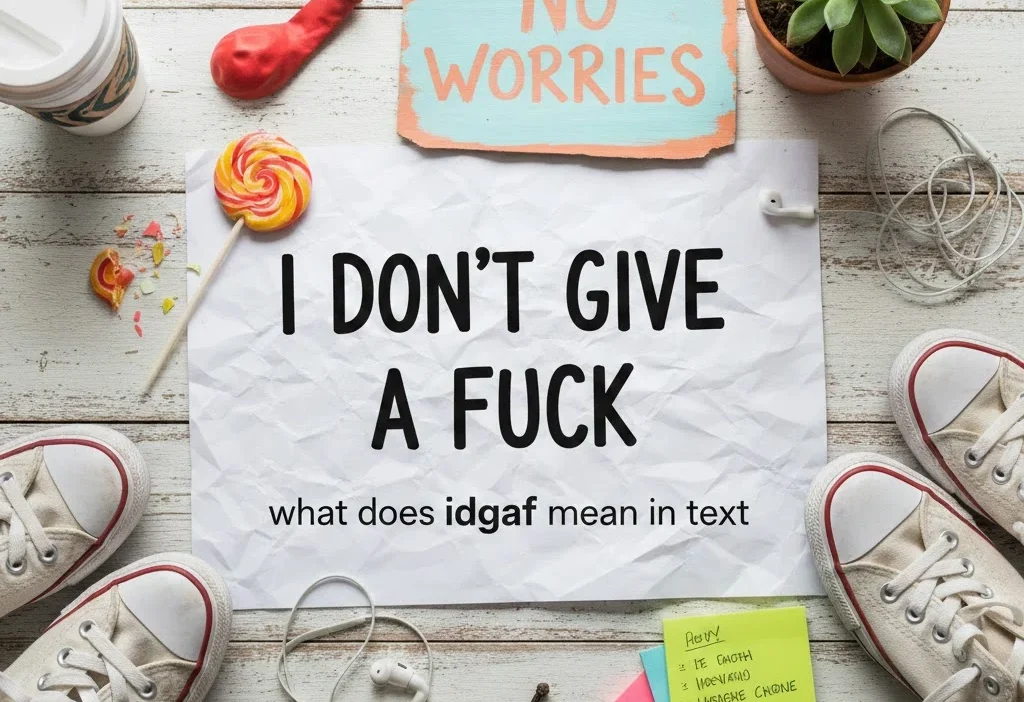
IDGAF means “I Don’t Give A F*.”** It’s a strong, blunt, and emotional way of saying “I don’t care at all.”
🧠 What Does IDGAF Mean in Text?
IDGAF is an acronym for “I Don’t Give A F*.”** It’s used when someone wants to express total indifference, frustration, or emotional detachment from a situation.
In texting, IDGAF often communicates:
- You’re done caring
- You’re annoyed or fed up
- You’re being brutally honest
- You don’t want further discussion
Example sentence:
“Say whatever you want, IDGAF anymore.”
In short:
IDGAF = I Don’t Give A F* = I truly don’t care**
Because it contains profanity, IDGAF is considered strong slang and should be used carefully.
🌍 Origin and Evolution of IDGAF
- IDGAF comes from internet culture and hip-hop slang
- Became popular in early 2000s online forums and texting
- Spread widely through music lyrics, memes, and social media
- Now common among Gen Z and millennials
Over time, IDGAF evolved from a harsh phrase into a casual emotional expression, depending on context. Sometimes it’s aggressive. Other times, it’s playful or sarcastic.
📱 Where Is IDGAF Commonly Used?
IDGAF is almost always informal and emotional. You’ll see it most often on:
- 📱 Text messages – venting or expressing frustration
- 🎵 TikTok – captions, comments, audio trends
- 📸 Instagram – story captions or replies
- 🐦 X (Twitter) – opinions, rants, sarcasm
- 🎮 Gaming chats – trash talk or indifference
- 💬 Group chats – emotional reactions
Tone:
- Casual
- Blunt
- Emotional
- Sometimes aggressive or humorous
🚫 Never appropriate for professional or formal settings
💬 Real Chat Examples of IDGAF in Conversation
Casual frustration
A: everyone keeps judging me
B: IDGAF, do you
Ending an argument
A: people will talk anyway
B: honestly IDGAF anymore
Playful sarcasm
A: what if they don’t like it?
B: lol IDGAF 😂
Emotional burnout
A: you seem distant
B: not mad, just IDGAF rn
Group chat vibe
A: we’re late again
B: IDGAF let’s go
Strong boundary
A: people gonna judge
B: IDGAF, my life
🕓 When to Use & When NOT to Use IDGAF
✅ When to Use IDGAF
- Venting to close friends
- Expressing emotional exhaustion
- Setting firm boundaries
- Casual or humorous conversations
- Social media captions or comments
❌ When NOT to Use IDGAF
- Work chats or emails
- School communication
- Talking to elders or authority figures
- Serious emotional discussions
- When clarity and respect are required
📊 Context Comparison Table
| Context | Example Phrase | Why It Works |
|---|---|---|
| Friend Chat | “IDGAF anymore 😤” | Emotional honesty |
| Social Media | “IDGAF what people think” | Bold & relatable |
| Work Chat | “This doesn’t concern me.” | Professional |
| “I’m not affected by this.” | Formal & respectful | |
| Family Talk | “I’m not worried about it.” | Polite alternative |
🔄 Similar Slang or Alternatives
| Slang | Meaning | Tone | When to Use |
|---|---|---|---|
| IDC | I Don’t Care | Mild | Casual chats |
| IDRC | I Don’t Really Care | Softer | Polite indifference |
| Whatever | Neutral dismissal | Casual | Light conversations |
| No cap | Honestly | Confident | Emphasizing truth |
| Meh | Mild disinterest | Neutral | Low emotion |
| Unbothered | Calm indifference | Mature | Social captions |
😎 Is IDGAF Rude or Offensive?
Short answer: It depends on context.
Can feel rude when:
- Used aggressively
- Said to someone directly
- Used during serious conversations
Feels acceptable when:
- Used jokingly
- Shared among friends
- Used as self-expression online
💡 Tip: If you wouldn’t say it out loud to someone’s face, don’t text it.
👥 Is IDGAF Used Differently by Guys vs Girls?
Guys:
- Often direct and blunt
- Used during arguments or jokes
- Less emoji usage
Girls:
- Often paired with emojis 😭😤
- Can be emotional or sarcastic
- Used to express burnout
Tone always depends on relationship + context.
📲 How IDGAF Is Used Across Platforms
| Platform | Usage Style | Tone |
|---|---|---|
| TikTok | Captions, trends | Bold, relatable |
| Stories, comments | Confident | |
| Snapchat | Private chats | Emotional |
| Twitter/X | Opinions, rants | Sarcastic |
| Gaming Chats | Trash talk | Aggressive or joking |
🧠 Psychological Meaning Behind IDGAF
Sometimes IDGAF isn’t about anger — it’s about self-protection.
People use it when:
- They’re emotionally drained
- They feel unheard
- They want control back
- They’ve stopped seeking approval
In many cases, IDGAF equals emotional boundaries.
🙋♂️ FAQs About IDGAF
1. What does IDGAF stand for in texting?
It stands for “I Don’t Give A F***.”
2. Is IDGAF always negative?
No. It can be empowering or humorous.
3. Can IDGAF be playful?
Yes, especially with emojis or jokes.
4. Is it okay to post IDGAF on social media?
Yes, but be mindful of your audience.
5. Is IDGAF professional language?
No, never use it in formal settings.
6. What’s a softer alternative to IDGAF?
IDC, IDRC, or “I’m unbothered.”
7. Can IDGAF hurt someone’s feelings?
Yes, if used directly toward them.
8. Is IDGAF slang or profanity?
Both — it’s slang that includes profanity.
📝 Mini Quiz – Test Your Knowledge
1. What does IDGAF mean?
a) I Don’t Get A Feeling
b) I Don’t Give A F*** ✅
c) I Don’t Go Alone
2. Is IDGAF appropriate for work emails?
a) Yes
b) No ✅
3. Which is a softer alternative to IDGAF?
a) IDC ✅
b) OMG
c) BRB
4. IDGAF usually expresses:
a) Excitement
b) Indifference or frustration ✅
c) Apology
5. Where is IDGAF most commonly used?
a) Legal documents
b) Texting & social media ✅
c) Academic writing
📝 Conclusion
IDGAF is a powerful slang term that expresses complete indifference, frustration, or emotional detachment. While it can feel harsh, it’s widely used in casual texting, social media, and online culture to show confidence or emotional boundaries. Understanding the context, tone, and audience is key to using IDGAF appropriately.
Now when you see or use IDGAF, you’ll know exactly what it means — and when it’s best left unsent.