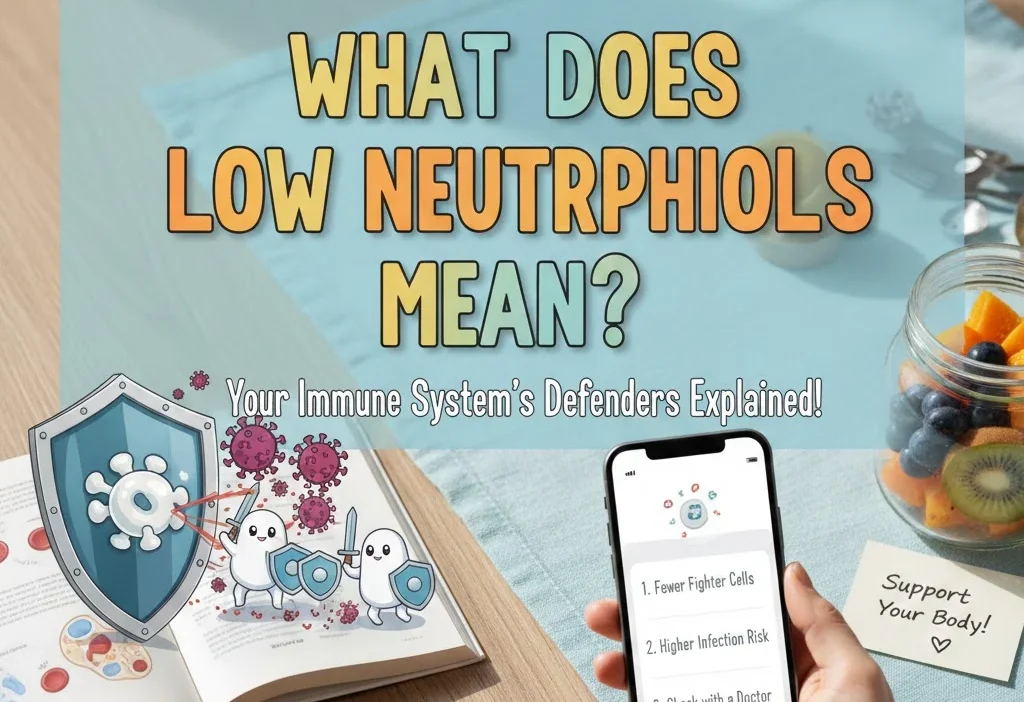
You check your blood test results and suddenly see something unfamiliar: “Low neutrophils.” Your heart sinks. Is it serious? Is it dangerous? Do you need treatment right away?
You’re not alone. Many people search what does low neutrophils mean after routine blood work, illness, or ongoing treatment. The term sounds medical and scary, but understanding it doesn’t have to be complicated.
This guide explains what low neutrophils mean, why it happens, common symptoms, causes, treatments, and when to worry. By the end, you’ll feel informed, calm, and confident about what this result actually means for your health.
Quick Answer:
Low neutrophils means your body has fewer infection-fighting white blood cells than normal. This condition is called neutropenia, and it can range from mild to severe depending on the count.
🧠 What Does Low Neutrophils Mean?
Neutrophils are a type of white blood cell that help your body fight infections, especially bacterial and fungal ones. They are your immune system’s first responders.
When blood tests show low neutrophils, it means your immune system may not be able to fight infections as effectively.
Example:
“My doctor said my neutrophils are low, so I need to be careful around sick people.”
In short:
Low neutrophils = fewer infection-fighting cells = higher infection risk
This condition is medically called neutropenia.
🧬 What Are Neutrophils and Why Are They Important?
Neutrophils make up 50–70% of your white blood cells. Their main job is to:
- Detect infections quickly
- Destroy bacteria and fungi
- Help heal damaged tissue
- Support overall immune defense
Think of neutrophils like security guards in your body. When their numbers drop, it becomes easier for infections to sneak in.
📊 Normal vs Low Neutrophil Levels
Doctors measure neutrophils using a test called ANC (Absolute Neutrophil Count).
| Neutrophil Level | ANC Count | Meaning |
|---|---|---|
| Normal | 1,500–8,000 | Healthy immune defense |
| Mild Neutropenia | 1,000–1,500 | Low risk |
| Moderate Neutropenia | 500–1,000 | Increased risk |
| Severe Neutropenia | Below 500 | High infection risk |
Important: Mild low neutrophils often cause no symptoms.
🌍 Where Is Low Neutrophils Commonly Found?
Low neutrophils are usually discovered during:
- 🩺 Routine blood tests
- 🤒 During illness or infection
- 💊 After medication use
- 🧬 Cancer treatment monitoring
- 🧪 Annual health checkups
It’s not something you “feel” immediately — it’s usually found through lab tests.
🔍 Common Causes of Low Neutrophils
There are many reasons why neutrophils can drop. Some are temporary, while others need medical attention.
✅ Common Causes
- Viral infections (flu, COVID-19, hepatitis)
- Bacterial infections
- Autoimmune disorders
- Vitamin B12 or folate deficiency
- Chemotherapy or radiation therapy
- Certain medications (antibiotics, seizure drugs)
- Bone marrow disorders
- Chronic stress or illness
Temporary vs Chronic
- Temporary neutropenia often resolves on its own
- Chronic neutropenia may need monitoring or treatment
🤒 Symptoms of Low Neutrophils
Mild neutropenia often causes no symptoms.
As levels drop, symptoms may include:
- Frequent infections
- Fever
- Sore throat
- Mouth ulcers
- Fatigue
- Skin infections
- Slow wound healing
⚠️ Important: Fever with low neutrophils is a medical emergency.
🕓 When to Use Caution & When NOT to Panic
✅ When to Monitor Closely
- Repeated infections
- ANC below 1,000
- Fever or chills
- Undergoing cancer treatment
- Autoimmune conditions
❌ When Not to Panic
- Slightly low count once
- Temporary illness recovery
- No symptoms present
- Doctor advises monitoring only
📋 Comparison Table
| Situation | Meaning | Action |
|---|---|---|
| Mild low neutrophils | Slight immune weakness | Monitor |
| Moderate neutropenia | Increased infection risk | Doctor follow-up |
| Severe neutropenia | High risk | Immediate care |
| Temporary drop | Illness related | Usually resolves |
| Chronic low levels | Underlying condition | Ongoing care |
💊 How Is Low Neutrophils Treated?
Treatment depends on the cause and severity.
Common Treatments
- Treating underlying infection
- Adjusting medications
- Vitamin supplements (B12, folate)
- Growth factor injections (G-CSF)
- Immune-suppressing therapy (if autoimmune)
Lifestyle Support
- Good hygiene
- Avoid sick contacts
- Proper nutrition
- Adequate rest
🍎 Foods That May Support Neutrophil Health
While food doesn’t cure neutropenia, it helps immune support.
- Leafy greens
- Citrus fruits
- Lean proteins
- Eggs
- Beans and lentils
- Fortified cereals
Always consult your doctor before making major diet changes.
🔄 Similar Medical Terms Explained
| Term | Meaning |
|---|---|
| Neutropenia | Low neutrophil count |
| Leukopenia | Low white blood cells |
| ANC | Absolute Neutrophil Count |
| Immunocompromised | Weakened immune system |
| Bone marrow suppression | Reduced cell production |
🙋♂️ FAQs About Low Neutrophils
1. Is low neutrophils serious?
It depends on how low the count is and whether symptoms are present.
2. Can low neutrophils go back to normal?
Yes, especially if caused by temporary illness or medication.
3. Can stress cause low neutrophils?
Chronic stress may contribute indirectly.
4. Should I avoid public places?
Only if your doctor recommends it due to severe neutropenia.
5. Does low neutrophils mean cancer?
No. Many non-cancer causes exist.
6. Can low neutrophils cause fatigue?
Yes, especially if infections occur.
7. How often should neutrophils be checked?
As advised by your healthcare provider.
📝 Mini Quiz – Test Your Knowledge
1. Low neutrophils means:
a) Too many red cells
b) Fewer infection-fighting cells ✅
c) High blood sugar
2. What is neutropenia?
a) Bone pain
b) Low neutrophils ✅
c) High cholesterol
3. Which level is most dangerous?
a) Mild
b) Moderate
c) Severe ✅
4. Can low neutrophils be temporary?
a) No
b) Yes ✅
5. What test measures neutrophils?
a) ECG
b) ANC ✅
c) MRI
📝 Conclusion
Low neutrophils can sound alarming, but in many cases, it’s manageable and temporary. Understanding what it means, recognizing symptoms, and following medical guidance makes all the difference. Whether it’s a mild dip or something that needs treatment, knowledge empowers you to respond calmly and correctly.
If your test shows low neutrophils, don’t panic — monitor, ask questions, and follow your doctor’s advice.