Have you ever read or heard someone called a novice and wondered exactly what it meant? Maybe you’ve seen it in school, sports, or online communities, and you weren’t sure whether it was a compliment or just a description.
If you’re asking “what does novice mean”, this guide will explain the definition, origins, real-life examples, usage in conversations, and related words. By the end, you’ll know exactly how to use novice correctly in any context.
Quick Answer:
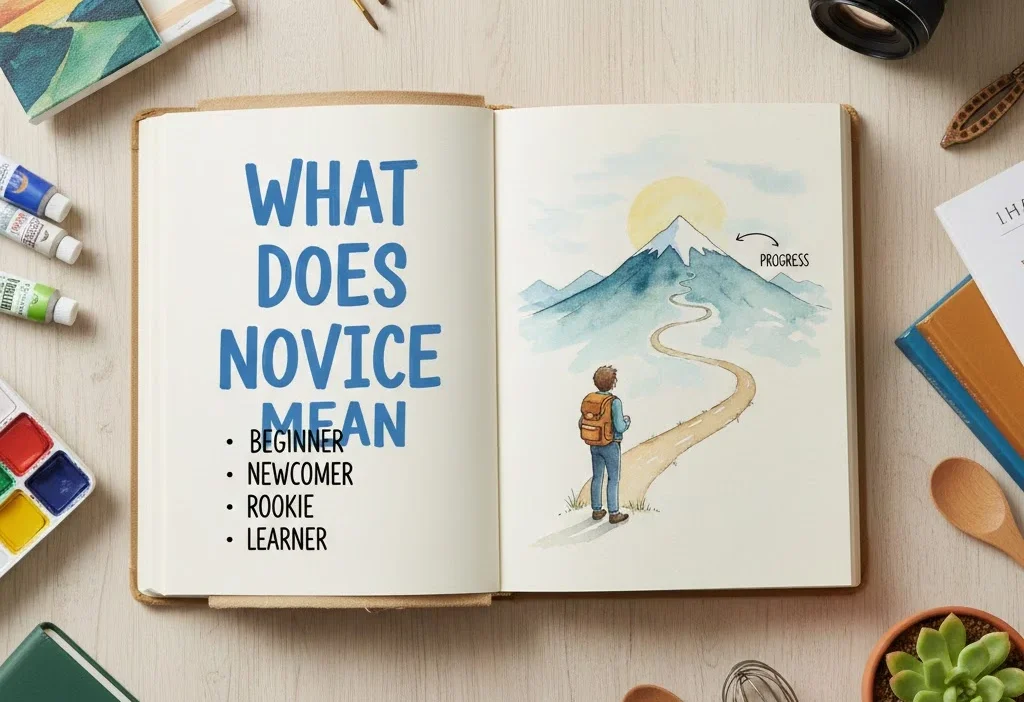
Novice means “a beginner or someone new to a particular activity or field.” It’s a neutral term that describes learning and early experience, often used in education, sports, work, and online communities.
🧠 What Does Novice Mean?
The word novice comes from the Latin word “novicius,” meaning “new” or “newly entered.” It refers to someone who is inexperienced or just starting a task, role, or skill.
Example in a sentence:
“Maria is a novice at painting, but her creativity is impressive.”
In short:
Novice = Beginner = Someone new to an activity or learning process.
It’s important to note that novice does not imply failure — it simply acknowledges someone is at the start of learning or practicing.
🌍 Origin and History of Novice
- Language: Latin → English
- Original Form: Novicius
- Meaning: Newcomer, beginner
- First Popularized: Medieval times, especially in monasteries to refer to new members
- Common Usage: Education, work, sports, online communities, and skill-based hobbies
Cultural Note: In historical contexts, novice often referred to new monks or nuns in religious orders who were still learning their duties. Today, it’s widely used in general learning contexts.
📱 Where Novice Is Commonly Used
Novice is versatile and can appear in multiple settings:
- 🎓 Education: Students learning a new subject or skill
- 🏅 Sports: Beginners in games, martial arts, or competitions
- 💻 Online communities: Forums, gaming, or coding groups
- 🏢 Workplace: Employees learning a new task or role
- 🎨 Hobbies: Painting, photography, music, cooking, etc.
Tone: Neutral, formal, or educational.
Avoid: Using it as an insult — novice simply describes experience level.
💬 Examples of Novice in Conversation
- A: How good are you at chess?
B: I’m just a novice, still learning the strategies. - A: Can you drive a car?
B: Only a novice, so I need supervision. - A: I joined the painting class.
B: That’s great! Novices always bring fresh perspectives. - A: Who’s leading the new project?
B: A team of novices is getting trained first. - A: I signed up for yoga today.
B: Perfect! Novices are welcome in beginner classes. - A: I want to start coding.
B: Awesome! Don’t worry if you’re a novice, we all start there. - A: She finished the marathon?
B: Yes, even as a novice runner, she did really well!
🕓 When to Use and When NOT to Use Novice
✅ When to Use Novice
- Describing a beginner in a neutral or encouraging way
- In educational, professional, or skill-based contexts
- When discussing learning or early experience
- In sports or competitions for new participants
- To acknowledge experience level without judgment
❌ When Not to Use Novice
- To insult or belittle someone
- In casual slang where simpler words like “newbie” might feel more natural
- In formal documentation where “beginner” might be preferred
- To describe someone experienced or advanced
Comparison Table
| Context | Example Phrase | Why It Works |
|---|---|---|
| Classroom | “The novice students attended the workshop.” | Formal & educational |
| Workplace | “Novice employees need training.” | Professional & neutral |
| Sports Club | “Novices are welcome at the beginner class.” | Casual, encouraging |
| Online Forum | “As a novice, feel free to ask questions.” | Friendly, instructional |
| Advanced Level | “This is for expert users, not novices.” | Clear differentiation |
🔄 Similar Words or Alternatives
| Word | Meaning | When to Use |
|---|---|---|
| Beginner | Just starting | Neutral, general |
| Newbie | New participant | Informal, casual |
| Trainee | Learning a job or skill | Professional, workplace |
| Rookie | Sports or casual | Informal, sports, gaming |
| Apprentice | Learning a trade | Formal, work/hobby |
| Novitiate | Beginner in religious order | Historical, formal |
🌟 Personality Traits Often Linked With Novices
While being a novice only describes experience, some traits often emerge:
- Curious and eager to learn
- Open-minded to new techniques
- Willing to make mistakes
- Patient and resilient
- Motivated by growth and improvement
Tip: Using the word novice in positive contexts can make beginners feel encouraged rather than judged.
🙋♂️ FAQs About Novice
1. Is novice only used for people?
Mostly yes, but it can describe groups or teams as well, e.g., “novice programmers.”
2. Is novice a positive or negative word?
Neutral — it simply means beginner. Tone matters.
3. Can novice apply to hobbies?
Absolutely! “I’m a novice at gardening” is perfect.
4. What is the difference between novice and newbie?
“Novice” is formal and neutral; “newbie” is informal and casual.
5. Can a novice become advanced quickly?
Yes, with practice, learning, and dedication.
6. Is novice used in online gaming?
Yes, it’s common for beginner players or teams.
📝 Mini Quiz – Test Your Knowledge
1. What does novice mean?
a) Expert
b) Beginner ✅
c) Teacher
2. Where does the word novice originate?
a) Greek
b) Latin ✅
c) Old English
3. Which of these is a casual alternative to novice?
a) Newbie ✅
b) Veteran
c) Master
4. Can novice describe a team of people?
a) Yes ✅
b) No
c) Only in sports
5. Which is the formal synonym of novice?
a) Apprentice ✅
b) Rookie
c) Newbie
6. Is novice a negative word?
a) No ✅
b) Yes
c) Sometimes
📝 Conclusion
“Novice” is a versatile, neutral word that simply describes a beginner in any field, hobby, or activity. Using it correctly can show understanding, respect, and encouragement for someone who is learning. Whether in education, sports, work, or online communities, calling someone a novice is a clear and professional way to acknowledge their experience level without judgment.
Novices are the foundation of growth — everyone starts somewhere, and embracing your novice stage is the first step toward mastery.