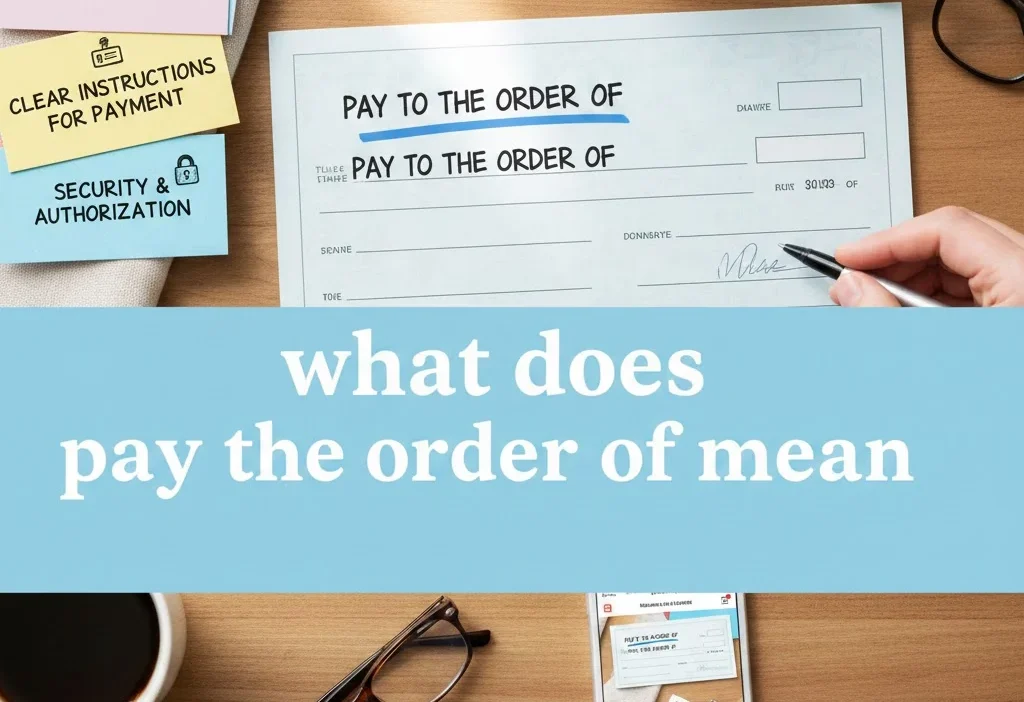
Have you ever seen the phrase “Pay to the order of” on a check or financial document and wondered what it really means? If you’re new to writing checks, banking, or business transactions, it can seem confusing.
This guide explains what “Pay to the Order of” means, how it works, examples, when to use it, similar phrases, and common FAQs. By the end, you’ll fully understand this financial term and how to use it safely.
Quick Answer:
“Pay to the Order of” means the person, business, or entity named after this phrase is authorized to receive the payment. It’s a formal banking phrase used mainly on checks to indicate the payee.
🧠 What Does “Pay to the Order of” Mean?
The phrase “Pay to the order of” is printed on checks, money orders, and other negotiable instruments. It directs the bank to pay the specified amount to the person or entity listed as the payee.
Example in a sentence:
“On the check, I wrote ‘Pay to the order of John Smith’ to ensure he could deposit it.”
In short:
Pay to the Order of = Designated Payee = The person or business authorized to receive payment
This ensures security and clarity in financial transactions, preventing the wrong person from cashing the check.
🌍 How It Works
- Writing a Check:
- The payer writes a check with the payee’s name after “Pay to the Order of.”
- Example: “Pay to the Order of Jane Doe $500.”
- Endorsement:
- The payee signs the back of the check when depositing or cashing it.
- Bank Processing:
- The bank verifies the signature and account information.
- The funds are transferred to the payee’s account.
This phrase is crucial for legal and banking purposes to ensure money goes to the correct recipient.
📱 Where “Pay to the Order of” Is Commonly Used
- 💵 Personal Checks – most common usage
- 🏦 Business Checks – payroll, invoices, and vendor payments
- 💳 Money Orders – official payments
- 📄 Legal Documents – settlement payments or official transactions
Tone:
- Formal and legal
- Must be precise to avoid financial errors
Avoid: Casual use outside banking or financial contexts.
💬 Examples in Real-Life Scenarios
- Writing a check to a friend:
“Pay to the order of Michael Lee $100 for concert tickets.” - Paying a business:
“Pay to the order of Green Valley Landscaping $350.” - Payroll check:
“Pay to the order of Emma Johnson $2,500.” - Money order:
“Pay to the order of City Utility Company $120.” - Settlement check:
“Pay to the order of John & Mary Smith $5,000.”
These examples show formal, safe, and proper use of the phrase.
🕓 When to Use and When NOT to Use “Pay to the Order of”
✅ When to Use
- Writing personal or business checks
- Money orders for bills or payments
- Legal settlements or official transactions
- Payroll checks
❌ When Not to Use
- Informal cash transfers
- Peer-to-peer payments like Venmo, PayPal, or Cash App
- Casual IOUs
- Email or text money instructions
Comparison Table
| Context | Example Phrase | Why It Works |
|---|---|---|
| Personal Check | “Pay to the order of John Smith $50” | Legal & clear |
| Business Invoice | “Pay to the order of ABC Supplies” | Official & secure |
| Money Order | “Pay to the order of City Utilities” | Formal & guaranteed |
| Informal Payment | “Send money to Mike” | Not secure, avoid |
🔄 Similar Banking Terms or Alternatives
| Term | Meaning | When to Use |
|---|---|---|
| Endorsement | Signature on the back of the check | Deposit or cash the check |
| Payee | Person or entity receiving money | Checks, money orders |
| Bearer | Check can be cashed by whoever holds it | Rare, less secure |
| Order Instrument | A negotiable instrument specifying a payee | Banking & legal documents |
| Negotiable Instrument | Any document guaranteeing payment | Legal/financial use |
🙋♂️ FAQs About “Pay to the Order of”
1. Can anyone cash a check with this phrase?
No, only the named payee can cash or deposit it.
2. Can I write “Cash” instead of a payee?
Yes, but it’s less secure since anyone can cash it.
3. Is this phrase required on checks?
Most personal and business checks include it to designate the payee clearly.
4. What if I make a mistake when writing the payee?
Void the check and write a new one to prevent banking issues.
5. Can a company endorse a check to another company?
Yes, with proper endorsements and legal documentation.
6. Is “Pay to the Order of” used in digital payments?
Not typically — it’s mainly for physical checks or money orders.
📝 Mini Quiz – Test Your Knowledge
1. What does “Pay to the Order of” mean?
a) Authorized payee ✅
b) Bank account number
c) Amount of money
2. Where is it commonly used?
a) Personal and business checks ✅
b) Cash App
c) Text messages
3. Can anyone cash a check with this phrase?
a) Yes
b) No ✅
c) Only banks
4. What is a payee?
a) Person authorized to receive payment ✅
b) Person writing the check
c) Bank officer
5. Can you write “Cash” instead of a name?
a) Yes, but less secure ✅
b) No
c) Only for legal documents
📝 Conclusion
“Pay to the Order of” is a formal banking phrase that ensures your money goes to the right person or business. Understanding its meaning and correct use can prevent mistakes, fraud, and confusion in financial transactions. Always write checks carefully, specify the correct payee, and use this phrase in legal or official payments to ensure clarity and security.