Have you ever read the word “posterity” in a book, speech, or legal discussion and felt unsure what it meant? Many people first encounter this word in quotes or historical documents and think it has something to do with the “future,” but the exact meaning isn’t always clear.
I remember reading a quote from Abraham Lincoln that said “for ourselves and our posterity,” and I had to pause to figure out what it really meant. Once I understood it, the word suddenly felt powerful and meaningful.
Quick Answer:
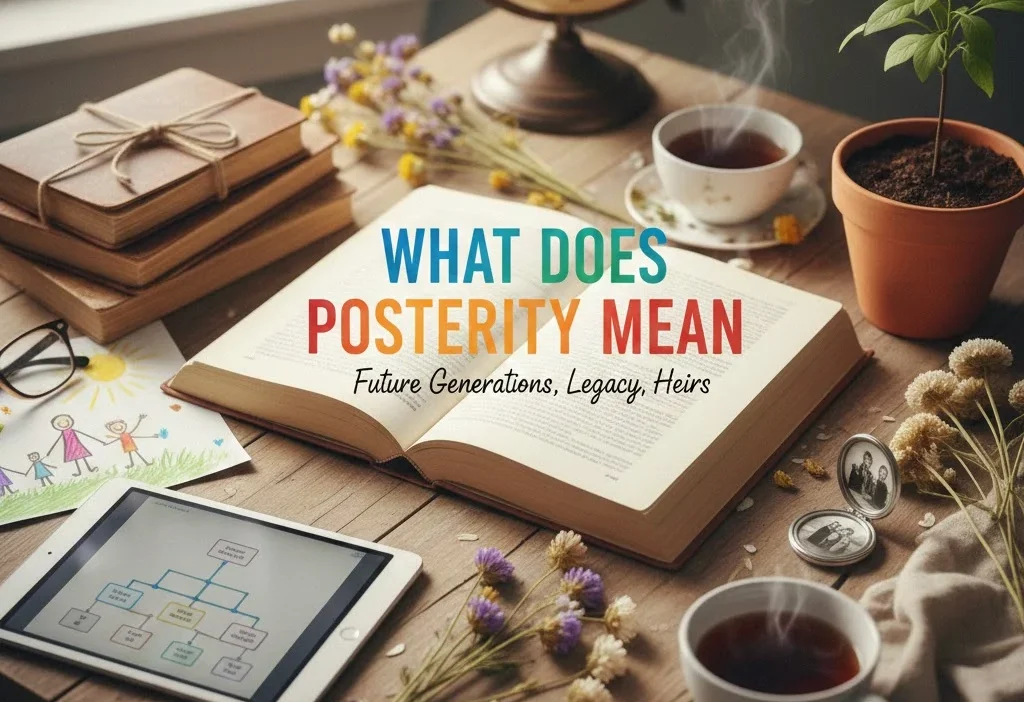
Posterity means “future generations.” It refers to people who come after us — our children, grandchildren, and anyone living in the future who will benefit from (or deal with) what we leave behind.
🧠 What Does “Posterity” Mean?
Posterity refers to the people who will live after us — future generation(s), descendants, or the society we leave behind.
When you make choices about the planet, wealth, law, or culture, you are impacting posterity.
Example sentence:
“We plant trees today for the benefit of posterity.”
In short:
Posterity = Future generations = Those who come after us.
This meaning is most common in discussions related to legacy, history, environment, law, inheritance, and society.
🌍 Where Is the Word “Posterity” Commonly Used?
You’ll see “posterity” most often in:
📜 Historical documents
📚 Literature and poetry
⚖️ Legal conversations or wills
🌱 Environmental discussions
💬 Inspirational speeches
It’s not casual slang and is rarely used in texting. Instead, it’s used in formal and thoughtful contexts.
💬 Real-Life Examples of “Posterity” in Conversation
Example 1:
A: “Why are we investing so much in cleaner energy?”
B: “Because we want a better world for posterity.”
2:
A: “You’re documenting everything?”
B: “Yes, I want to preserve this for posterity.”
Example 3:
A: “Why do you save family photos?”
B: “For posterity — future generations will want to see them.”
Example 4:
A: “Why protect old monuments?”
B: “They’re part of history; posterity deserves to know them.”
5:
A: “Are you planting trees again?”
B: “Yep — doing something for posterity.”
Example 6:
A: “What’s the point of storing all these records?”
B: “They’ll be useful for posterity.”
🕓 When to Use and When NOT to Use “Posterity”
✅ When to Use
Use “posterity” when referring to:
- Future generations
- The people who come after us
- Historical preservation
- Legacy and long-term planning
- In formal writing or speeches
❌ When NOT to Use
Avoid “posterity” in:
- Casual texting
- Slang conversations
- Everyday friendly chats
- Humorous or sarcastic tone
- When talking about the present
Comparison Table
| Context | Example Phrase | Why It Works |
|---|---|---|
| Environmental Speech | “We must protect forests for posterity.” | Meaningful and forward-thinking |
| Family History | “These old letters should be saved for posterity.” | Refers to descendants |
| Legal Will | “This fund is reserved for posterity.” | Talks about future inheritors |
| Casual Text | “lol save this for posterity 😂” | ❌ Sounds odd and overly formal |
| Daily Chat | “We should do this for the future.” | More natural wording |
🔄 Similar Words or Alternatives
| Word | Meaning | When to Use |
|---|---|---|
| Future generations | People who will live after us | Everyday speech |
| Descendants | Our children & grandchildren | Family context |
| Legacy | What we pass onward | Gifts, culture, achievements |
| Heirs | Legal inheritors | Wills, legal terms |
| Offspring | Children | Biological context |
These words can replace posterity depending on tone and situation.
🌟 Examples of Posterity in Famous Quotes
Posterity appears frequently in speeches, history, and writing.
- “We do not inherit the earth from our ancestors, we borrow it from our posterity.”
- “The Constitution was written not only for the present but for posterity.”
These quotes focus on responsibility, legacy, and long-term impact.
🧭 Origin of the Word “Posterity”
- Language: Latin
- Original Word: posteritas
- Meaning: “Those who come after” / “Future descendants”
The Latin root “post” means after, which perfectly explains the meaning.
🙋♂️ FAQs About “Posterity”
1. Does posterity mean future people?
Yes — it refers to future generations.
2. Is posterity the same as offspring?
Not exactly.
Offspring means immediate descendants;
Posterity means all generations to come.
3. Can posterity mean history?
No. Posterity refers to future, not the past.
4. Is posterity formal?
Yes — used mainly in speeches, writing, or academic contexts.
5. Can I use posterity instead of the future?
Sometimes, but “future” is more casual.
6. Is posterity a positive word?
Generally yes — it’s used when discussing caring for future people.
📝 Mini Quiz — Check Your Understanding!
1. What does posterity mean?
a) Past generations
b) Our family members
c) Future generations ✅
2. Which example uses the word correctly?
a) “I saved dessert for posterity.”
b) “These records are preserved for posterity.” ✅
c) “Posterity is happening today.”
3. Is posterity slang?
a) Yes
b) No ✅
4. Which context fits the word best?
a) Saving old documents for future people to see. ✅
b) Texting your friend about lunch.
📝 Conclusion
The word posterity speaks to legacy, responsibility, and the impact our actions have on the future. Whether discussing sustainability, history, inheritance, or culture, “posterity” reminds us that our lives influence people who haven’t even been born yet. Understanding this word adds depth to speeches, writing, and conversations about long-term vision and values.